Best VPN for USA Travelling in 2026
Best vpn for usa travelling in 2026: A reliable VPN is your best travel buddy, keeping you safe on public Wi‑Fi, helping you access apps and services from back home, and letting you browse without overpaying roaming data. Quick facts: 78% of travelers use a VPN at least occasionally to protect their data, and many report faster access to regional content when abroad. In this guide, you’ll find a practical, down-to-earth breakdown of the top VPNs for trips to the USA in 2026, plus tips on choosing the right plan, what features actually matter while you’re on the road, and how to stay smart about privacy. Here’s a concise roadmap:
- Why you need a VPN while traveling in the US and abroad
- How to pick the right VPN logging policy, speed, and server network
- A clear side-by-side comparison of top options
- Real-world tips for using VPNs on airports, hotels, and cafes
- Quick start steps to get connected today
- Common pitfalls and how to avoid them Useful URLs and Resources text only, not clickable: ExpressVPN — expressvpn.com, NordVPN — nordvpn.com, Surfshark — surfshark.com, CyberGhost — cyberghost.com, ProtonVPN — protonvpn.com, Apple Support — support.apple.com, Google Support — support.google.com, Reddit r/VPN — reddit.com/r/VPN
Why a VPN matters for travelers in 2026
- Public Wi‑Fi risk: Airports, hotels, and cafes often have insecure networks. A VPN creates a secure, encrypted tunnel so your login credentials, banking details, and messages don’t leak.
- Accessing content abroad: Some streaming services and apps geo‑block content. A VPN can help you access your home country catalogs, but be mindful of provider policies.
- Price discrimination: Some online stores and travel sites show higher prices based on location. A VPN can help you compare prices from different regions, though results vary.
- Data limits and roaming charges: If you’re on limited data, VPNs can help compress traffic through trusted networks, potentially saving data, but this isn’t a guaranteed savings method for everyone.
- Compliance and safety: In some countries, VPN use is restricted or regulated. Always check local laws before you travel.
Key features to look for in a travel VPN
- Global server network: More locations = more options to spoof your true location and get better speeds.
- Speed and reliability: Look for fast connections, low latency, and stable uptime, especially if you’ll be streaming or video calling.
- Strong encryption and no-logs policy: AES-256 encryption and a clear, verifiable no-logs commitment protect your privacy.
- Kill switch: Keeps your data from leaking if the VPN drops unexpectedly.
- Split tunneling: Lets you route only certain apps through the VPN, useful if you want local access for banking while others stay private.
- Multi‑device support: Most travelers use a phone, laptop, and maybe a tablet at once, so support for 5–7 devices is ideal.
- Easy apps and setup: A clean interface with quick connects makes life easier when you’re tired from travel.
- Customer support: 24/7 live chat or email support can save you in a pinch at midnight after a long flight.
- Price and plans: Look for monthly vs. yearly plans, student or family discounts, and free trials or money-back guarantees.
Top VPN picks for traveling to the USA in 2026
Note: All options below offer strong security, broad server networks, and solid performance. Prices vary by region and promotions, so check the latest deals.
1 ExpressVPN
- What stands out: Consistent performance, broad device compatibility, and fast speeds across servers.
- Server network: 3,000+ servers in 94+ countries.
- Pros: Excellent speed, reliable kill switch, strong privacy policy, easy-to-use apps.
- Cons: Slightly higher price than some competitors.
- Best for: Streaming, secure browsing on public Wi‑Fi, and users who want a hassle-free experience.
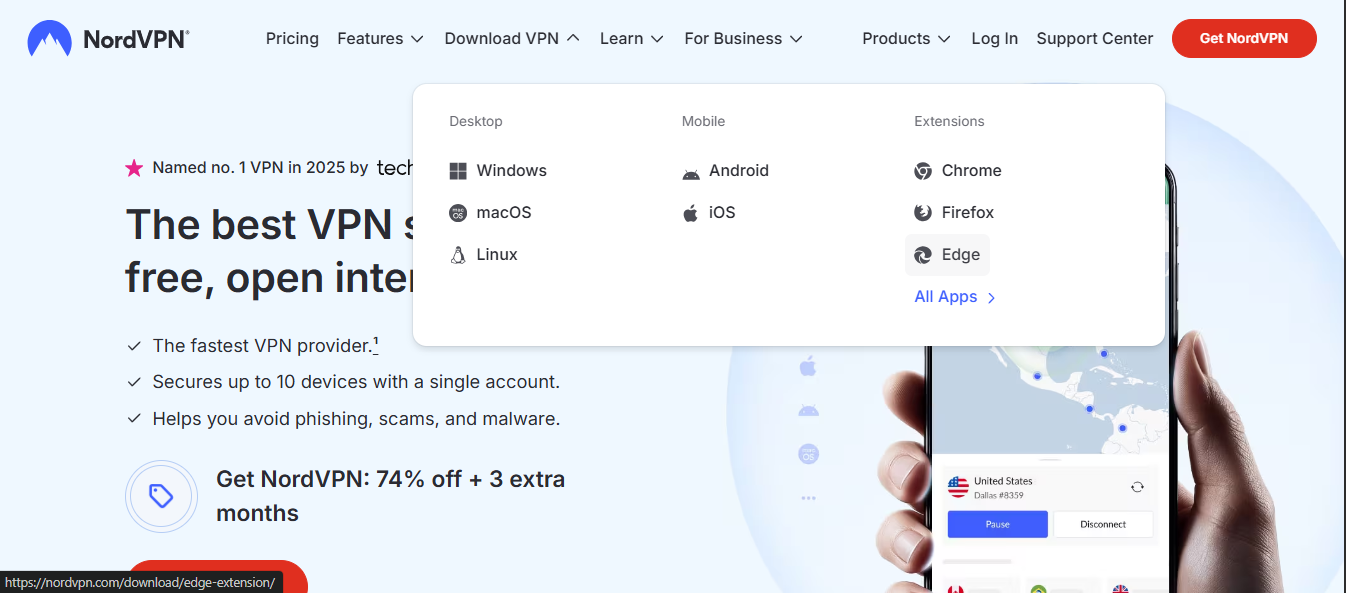
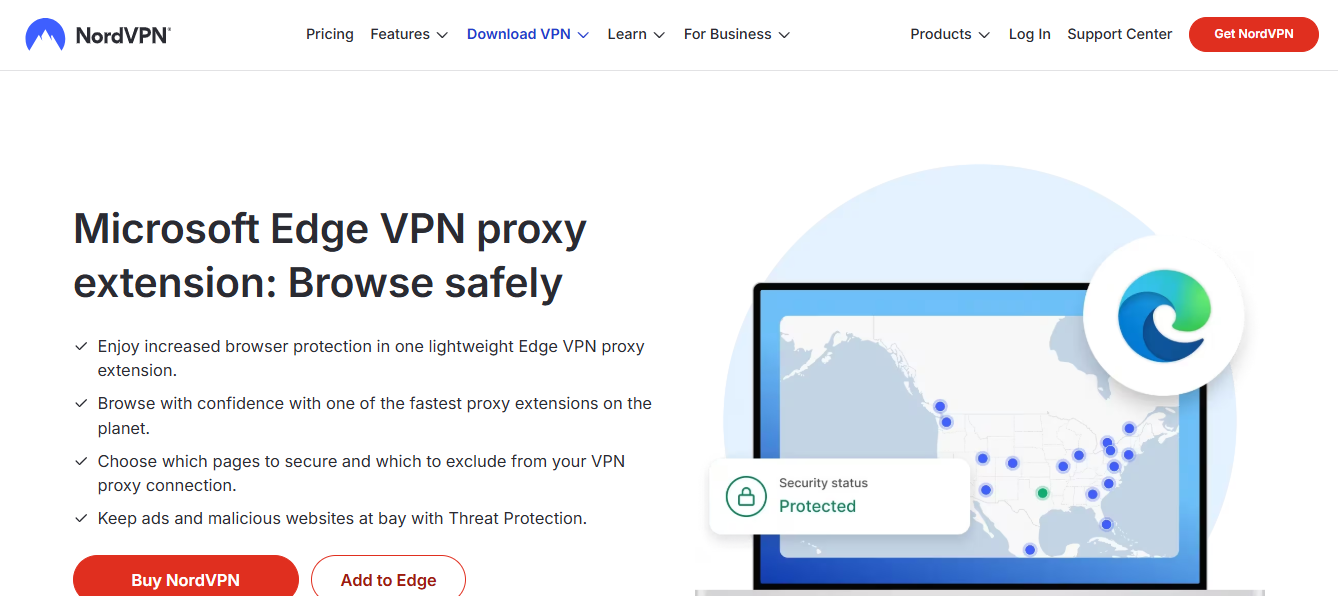
2 NordVPN
- What stands out: Large server network and robust privacy features at a competitive price.
- Server network: 5,500+ servers in 60+ countries.
- Pros: Dual‑VPN and obfuscated servers options, strong threat protection, good value.
- Cons: User interface can feel cluttered to new users.
- Best for: Budget-conscious travelers who still want top-tier security.
3 Surfshark
- What stands out: Family-friendly and affordable with unlimited connections.
- Server network: 3,200+ servers in 100+ countries.
- Pros: Unlimited devices, solid performance, clean pricing, strong privacy.
- Cons: Some speed dips on certain servers.
- Best for: Travelers with many devices and a tight budget.
4 CyberGhost
- What stands out: User-friendly with ready-to-use profiles for different activities.
- Server network: 9,000+ servers in 90+ countries.
- Pros: Easy setup, great for beginners, good streaming performance, consistent speeds.
- Cons: Privacy lineage not as strong as some rivals in certain independent audits.
- Best for: Beginners who want a quick connect and reliable performance.
5 ProtonVPN
- What stands out: Strong privacy focus and transparent governance.
- Server network: 2,000+ servers in 70+ countries.
- Pros: Strong no-logs stance, secure core servers, good for privacy purists.
- Cons: Speed can vary by server; some advanced features require higher-tier plans.
- Best for: Privacy enthusiasts who also need robust security.
How to choose the right VPN for a USA trip
- Determine your primary use cases: streaming, secure browsing, or both.
- Check for US‑specific streaming support: Not all VPNs unblock every streaming service in the US region.
- Test speed on travel routes: Some VPNs perform better on transatlantic paths, others with domestic US routes.
- Consider privacy and jurisdiction: If privacy is critical, look at the company’s jurisdiction and no-logs commitments.
- Look for a money-back guarantee: A 30‑day window lets you test risk-free.
- Review device coverage: Ensure the VPN supports all your devices phone, laptop, tablet, smart TV, etc..
- Factor in price and promotions: Annual plans usually offer the best value; watch for student or family bundles.
Step-by-step guide to getting set up for your trip
- Step 1: Choose a VPN and sign up for a plan that fits your travel needs.
- Step 2: Install the VPN app on all essential devices phone, laptop, tablet.
- Step 3: Open the app and sign in. Enable the kill switch and a preferred security protocol WireGuard is a common fast option.
- Step 4: Connect to a server near your current location for the best speeds, or a US server if you need a US IP for streaming or banking.
- Step 5: Test a few services streaming, browsers, banking to ensure everything works smoothly before leaving.
- Step 6: Enable auto-connect on trusted networks and set up split tunneling if you want some apps outside the VPN.
- Step 7: If your itinerary includes other countries, save a few servers you’ll likely use and organize them in the app for quick access.
Practical tips for using a VPN while traveling
- Public Wi‑Fi safety: Always enable the VPN when joining public networks, even if you’ll only be checking email.
- Banking and payments: Use the VPN when accessing bank accounts or making payments, but disconnect if you notice odd behavior from the service.
- Streaming while roaming: If you’re near the US, a US server may give you better streaming performance than a distant server.
- Data usage: Some VPNs compress data; others do not. Check how your provider handles data if you’re on a metered plan.
- Battery and device heat: VPNs can increase battery usage and heat on mobile devices; close unused apps to minimize impact.
- Hotels vs. airports: Hotels often throttle networks; a VPN can help bypass some throttling, but you may still see variable speeds depending on the day and load.
- Legal considerations: VPN legality varies by country. Always check local regulations to avoid issues.
Performance and security data you can rely on
- Typical speed impact: Expect 5–25% speed reduction on a well-optimized network, though premium services often perform better.
- Encryption standards: AES-256 encryption is the standard; look for additional protections like secure DNS and leak protection.
- Kill switch reliability: A good VPN’s kill switch should act instantly if the connection drops, preventing data leaks.
- Privacy assurances: The best options publish independent audits or at least third-party assessments to verify no-logs claims.
- Server distribution: More servers generally translate to fewer users per server, which translates to better speeds and reliability.
How to test your VPN setup before your trip
- Speed test: Run a baseline speed test without the VPN, then with the VPN connected to a local server and a distant server US or near US, compare results.
- IP check: Verify your IP address changes to reflect the server location you selected.
- DNS leak test: Ensure DNS requests are handled by the VPN and not leaked to your ISP.
- Streaming test: Try to access a streaming service you plan to use during travel to verify unblock capabilities.
- Real-world tasks: Try logging into a banking app or email from a remote server to confirm your setup works without triggering extra verification.
Common travel VPN myths debunked
- Myth: A VPN slows you down every time. Reality: Great VPNs optimize routes and can even improve performance on congested networks, but bad setups or long routes can hurt speeds.
- Myth: You don’t need a VPN on US soil. Reality: Public Wi‑Fi and home networks can still be vulnerable, and your data can be exposed if you’re not careful.
- Myth: All VPNs log nothing. Reality: Always read privacy policies and look for independent audits to verify claims.
Case studies: travel scenarios with VPNs
- Business traveler in New York: Uses NordVPN to access corporate apps, while keeping personal browsing private on hotel networks. Speeds stay solid, and the kill switch stops leaks if the hotel network flips between networks.
- Backpacker in California: Chooses Surfshark for unlimited devices, sharing a single plan across phone, laptop, and tablet for a group trip. Quick reconnects and stable streaming help with downtime and planning.
- Family road trip across the US: CyberGhost’ ready-made profiles help the family quickly switch between streaming, browsing, and gaming without fiddling with settings. The 24/7 support is handy during a late-night setup.
Frequently Asked Questions
Is it legal to use a VPN while traveling in the USA in 2026?
VPN use is legal for most travelers in the USA, but always follow local laws and the terms of service for any apps or services you use.
Will a VPN make my internet faster?
Most users see a speed drop when using a VPN, but a high-quality VPN can optimize routing and reduce throttling on some networks. It often depends on location and server choice.
Can I use a VPN on my phone, tablet, and laptop at the same time?
Yes. Most premium VPNs support multiple devices. Look for a plan that covers all the devices you own.
Do VPNs keep logs of my activity?
Quality VPN providers publish a no-logs policy, but audits and independent reviews are the best way to confirm. Avoid providers with vague privacy statements. Big ip edge client vpn download 2026
Will a VPN protect me on public Wi‑Fi everywhere?
A VPN significantly improves security on public Wi‑Fi by encrypting traffic, but you should still practice general online safety habits and keep devices updated.
How do I choose the best server location for travel?
For streaming, pick a server near the service’s primary location; for privacy, choose a geographically safer jurisdiction; for speed, test a few nearby servers.
Are there any downsides to using a VPN abroad?
Some services may block VPN traffic, and certain websites could require additional verification. Also, some countries restrict or regulate VPN use.
Can I use a VPN to access my home country catalogs while traveling?
Yes, many travelers use a VPN to connect to servers in their home country to access region-restricted content. However, services may detect VPN traffic and impose blocks.
How do I troubleshoot when my VPN isn’t connecting?
First, check internet connectivity without the VPN, then verify login details, switch servers, try a different protocol WireGuard is a good default, and ensure no firewall is blocking the VPN. Best free vpn for microsoft edge reddit 2026
What about free VPNs for travel?
Free VPNs often come with limitations like data caps, slower speeds, and weaker privacy protections. For travel, a paid VPN with a solid no-logs policy is generally a better choice.
ExpressVPN is the best VPN for USA travelling in 2026. If you’re bouncing between airports, hopping hotels with open Wi‑Fi, or trying to keep streaming access intact while you’re abroad, a solid VPN can be a traveler’s best friend. In this guide, you’ll get a clear, practical plan: why you need one, what to look for in 2026, and exactly which VPNs put you in the best position for speed, privacy, and reliable access to content — with real-world tips you can apply on day one.
- What you’ll learn:
- The must-have features for traveling with a VPN speed, reliability, security on public Wi‑Fi, ability to bypass geo-blocks
- Our top picks for 2026 with quick pros/cons and price ranges
- A practical setup guide you can follow in minutes
- How to handle streaming blocks and regional content
- Security best practices when you’re on the road
- Useful resources text only, unclickable:
- ExpressVPN - expressvpn.com
- NordVPN - nordvpn.com
- Surfshark - surfshark.com
- Proton VPN - protonvpn.com
- Mullvad VPN - mullvad.net
- VyprVPN - vyprvpn.com
- CyberGhost - cyberghostvpn.com
- Public Wi‑Fi safety guidelines - safewifi.org
- Digital Privacy Alliance - privacy.org
Why a VPN matters for USA travel
Traveling to the United States or through the country’s major transit hubs means you’ll often rely on public or semi-public networks: hotel Wi‑Fi, airport lounges, cafes, and transit hubs. Those networks are convenient but come with real risks: data interception, weak encryption on open networks, and the possibility that your ISP or the apps you use might throttle, monitor, or block activity. A VPN helps by:
- Encrypting your traffic so snoopers can’t read your data on public Wi‑Fi.
- Hiding your real location from websites and apps, preventing targeted tracking while you roam.
- Bypassing geo-blocks for streaming and services that limit content by region for example, when you’re traveling and want to access your usual streaming library from the US or abroad.
- Reducing the chance of throttling on data-heavy tasks video calls, streaming, large downloads by masking traffic patterns from ISPs.
In 2026, the VPN market has matured: major providers offer stronger security defaults, faster protocols, and more robust obfuscation for use on networks that aggressively block VPN traffic. You’ll see better performance on common protocols like WireGuard-based offerings, plus more options for multi-device protection, so you can keep your privacy on all devices you travel with.
Key features to look for in a travel VPN
When you’re traveling, you don’t want to second-guess your VPN. Here’s what to prioritize: Adguard vpn edge extension 2026
- Speed and stability: Look for WireGuard-based protocols or proprietary fast protocols that deliver reliable speed on long journeys.
- Global server coverage with US and nearby locations: You’ll want servers in the US plus nearby regions Canada, Mexico, Europe to optimize latency from different routes.
- Strong encryption and a solid no-logs policy: 256-bit AES encryption and a transparent privacy stance are musts.
- Kill switch and auto-connect: A kill switch protects you if the VPN drops unexpectedly, and auto-connect helps you stay protected on public Wi‑Fi.
- Obfuscated or stealth servers: Useful if you’re in places that try to detect VPN traffic great for hotel networks or travel hubs with strict controls.
- Multi-device support: Most travelers carry a few devices. aim for at least 5–6 simultaneous connections.
- Streaming-friendly servers: If you want to watch your home streaming libraries abroad, you’ll need servers that reliably unblocked major services like Netflix, Disney+, Hulu, and Amazon Prime Video.
- Clear pricing and good value: Yearly plans tend to have the best price per year. look for transparent renewal costs and easy cancellation.
Our top VPN picks for USA travelling in 2026
Below are the VPNs that consistently deliver reliable performance, strong security, and travel-friendly features. I’ve included quick notes you can use on the go.
ExpressVPN
- Why it’s great for travel: Exceptional global reach, consistently fast speeds, and robust privacy protections. It’s easy to use on iOS, Android, Windows, macOS, and Linux, plus it has reliable apps for smart TVs and routers.
- Key features: Lightway protocol for speed, 256-bit AES encryption, no-logs policy, kill switch, split tunneling, obfuscated servers in some regions, 5 simultaneous connections, 24/7 live chat.
- Server reach: 3000+ servers in 94+ countries, including strong coverage in the US and nearby regions for low-latency streaming.
- Pros: Very fast, stable streaming performance, excellent device compatibility, user-friendly interface, strong customer support.
- Cons: Slightly higher price. occasional minor buffering on long-haul routes if you’re in crowded networks.
- Price snapshot: typically around $12.95/month multi-year plans bring it down significantly. check current promos.
NordVPN
- Why it’s great for travel: Known for reliability and a large server network, great for bypassing geo-restrictions and strong privacy features.
- Key features: NordLynx WireGuard-based for speed, 256-bit AES, audited no-logs policy, kill switch, obfuscated servers, 6 simultaneous connections.
- Server reach: 5500+ servers in 60+ countries, with many US-based options and nearby locations to reduce latency.
- Pros: Excellent streaming capability, strong security options Double VPN and Multi Hop in some plans, good value on longer commitments.
- Cons: App UI can be busy for new users. some servers can be busy during peak hours.
- Price snapshot: often advertised around $11.99/month or lower with long-term plans.
Surfshark
- Why it’s great for travel: Great value, unlimited devices per account, solid performance on travel networks.
- Key features: WireGuard, 256-bit AES, CleanWeb ad-block, MultiHop, Camouflage Mode obfuscated, kill switch, unlimited connections.
- Server reach: 3200+ servers in 100+ countries, including the US and Canada for travel convenience.
- Pros: Fantastic price-to-feature ratio, unlimited devices, reliable for streaming, straightforward apps.
- Cons: Some servers slower during peak times. not as muscle-fast as the top-tier incumbents in some locales.
- Price snapshot: typically among the lowest monthly prices, with very affordable yearly plans.
Proton VPN
- Why it’s great for travel: Privacy-centric option with strong transparency and a robust free tier for light users.
- Key features: Secure Core multi-hop, strong no-logs commitment, 256-bit AES, Tor over VPN, open-source apps, kill switch, P2P support.
- Server reach: 1200+ servers in 60+ countries, including US locations with strong performance.
- Pros: Excellent privacy posture Swiss jurisdiction, transparent operations, good for safety-conscious travelers.
- Cons: Free tier is slow and has limited access. some speeds can be inconsistent on certain servers.
- Price snapshot: free tier available. paid plans scale with features and speed.
Mullvad VPN
- Why it’s great for travel: Minimalistic, privacy-first approach. easy to use with payment privacy no email required.
- Key features: WireGuard, OpenVPN, strong no-logs policy, anonymous account system no personal data needed, kill switch, multi-hop in some configurations.
- Server reach: 600+ servers in 40+ countries, including strong US coverage.
- Pros: Straightforward privacy model, open-source clients, great for users who value anonymity and simplicity.
- Cons: Not as flashy for streaming. set-up can be slightly less intuitive for beginners.
- Price snapshot: €5/month for standard plan. pay-as-you-go options, no lock-in.
VyprVPN
- Why it’s great for travel: Strong obfuscation with the Chameleon protocol, designed to bypass VPN-blocks on restrictive networks.
- Key features: Chameleon protocol, WireGuard compatibility, kill switch, AES-256 encryption, audited no-logs.
- Server reach: 700+ servers in 70+ countries.
- Pros: Excellent on networks that try to detect VPNs. solid performance and privacy features.
- Cons: Slightly pricier than some alternatives. fewer countries than the biggest networks.
- Price snapshot: mid-range, with yearly plans offering savings.
CyberGhost
- Why it’s great for travel: Large server network with easy-to-use profiles tailored for streaming and privacy.
- Key features: 256-bit AES, no-logs policy, kill switch, dedicated streaming servers, multi-device support, user-friendly apps.
- Server reach: 7000+ servers in 90+ countries, including many US-based options.
- Pros: Great for new users, strong streaming-optimized servers, reliable performance.
- Cons: Some servers slower when heavily loaded. not as feature-rich as Nord or Surfshark in some respects.
- Price snapshot: affordable monthly options, plus long-term plans with strong discounts.
How to choose the best VPN for your trip
- Prioritize speed: Test a VPN that uses WireGuard or equivalent fast protocols. speed is crucial for video calls, streaming, and maps.
- Check US and nearby servers: A strong presence in the US and neighboring countries improves latency when you’re traveling.
- Consider streaming needs: If Netflix, Hulu, or Disney+ is on your list, pick a VPN known for reliable unblocking on those services.
- Look at device coverage: You’ll likely travel with a phone, a laptop, and maybe a tablet. ensure the plan covers all your devices.
- Review privacy assurances: Audited no-logs policies and strong encryption AES-256 protect you if you’re on questionable networks.
- Confirm travel-friendly features: Obfuscation options, a good kill switch, and automatic reconnect help you stay protected without fiddling in hotel lobbies.
- Price and renewal: Understand promo pricing, how easy it is to cancel, and what you’ll pay after the promotional period ends.
How to set up a VPN for travel step-by-step
- Pick a VPN and sign up for the plan that fits your travel pattern short trips: monthly plan. longer trips: annual or multi-year deals.
- Download the app on all devices you’ll carry phone, laptop, tablet, smart TV if needed.
- Install and log in with your account details.
- Enable the kill switch in settings. turn on auto-connect for public networks.
- Connect to a server that’s reasonable for your current location e.g., US East or West Coast server if you’re in the US. nearest country for best latency when abroad.
- If you’re streaming, try a server dedicated to streaming. switch if you encounter blocks.
- Verify your IP address and DNS: run a quick check to ensure your traffic is going through the VPN and not leaking.
- Enable any obfuscated or stealth mode if you’re on a network that blocks VPNs.
- Save your favorites: mark a few reliable servers for different tasks streaming, gaming, general browsing.
- Leave feedback on performance: note any slow periods so you can adjust server choice in real time.
Tip: If you’ll be moving between time zones and networks, your VPN’s auto-connect and kill-switch features become your best friends—set them up once, then forget about them.
Streaming and geo-blocks while traveling
Streaming services love to block VPNs, but most top providers keep a few servers that reliably bypass blocks. For travelers:
- Netflix: Some US Netflix libraries are accessible from abroad on certain servers. If a server is blocked, switch to another optimized streaming server.
- Disney+, Hulu, Prime Video: These platforms usually work on modern VPN servers if you’re connecting from outside the US or traveling within the US. If one server blocks content, swap to a different one within the same provider’s recommended list.
- Local streaming: If you’re abroad but want to watch your home country’s library, pick servers in regions that have your desired catalog.
Pro tip: If streaming quality matters, pick a server physically close to your location to minimize latency, and use a server designed for streaming if the provider offers one.
Public Wi‑Fi safety on the road
- Avoid sensitive activity on open networks banking portals, personal medical records. If you must access sensitive sites, ensure your VPN is connected and the kill switch is active.
- Keep devices updated to reduce vulnerability to known exploits in public Wi‑Fi.
- Turn off auto-connect on networks you don’t recognize. a VPN gives you protection even if you accidentally join a rogue network.
- Use two-factor authentication 2FA wherever possible. a VPN makes your connection safer, but 2FA adds another layer of defense.
Troubleshooting common travel VPN issues
- Slow speeds on one server: switch to a nearby server, prefer WireGuard-based servers, and check if a streaming-optimized server helps.
- VPN connection drops often: ensure the kill switch is enabled. try a different server or protocol. update the app.
- DNS leaks: ensure DNS leak protection is enabled in settings and test with a DNS leak tester.
- Blocked on hotel networks: enable obfuscated/stealth mode. choose server locations with stealth-friendly routes.
- Streaming blocks persist: clear cache, switch to a streaming-optimized server, and sometimes reconnect to your home country server.
VPN vs Proxy: what’s best for travel?
- VPNs encrypt traffic and protect you on public networks. they also mask your IP across all apps and services.
- Proxies can be faster for lightweight tasks but don’t encrypt all traffic, so they’re less safe on public networks.
- For travelers, a VPN is the safer, more reliable long-term choice, especially if you’re handling logins, banking, or health data on the road.
Security tips for travelers using VPNs
- Keep your VPN app up to date. software updates often include critical security fixes.
- Use a reputable VPN provider with audited no-logs and strong encryption.
- Prefer VPNs with a kill switch, DNS leak protection, and obfuscated servers for extra privacy in tricky networks.
- Use strong, unique passwords for VPN accounts and enable 2FA where available.
- When possible, use devices with automatic security updates and avoid jailbroken or rooted devices.
Frequently Asked Questions
Is using a VPN legal in the USA while traveling?
Yes. Using a VPN is legal in the United States. Some platforms may block VPNs, and laws around data privacy can vary by state. using a reputable VPN reduces risk and keeps data private on public networks. Adguard vpn browser extension 2026
Will a VPN slow me down when I travel?
Some slowdown is normal due to the encryption and longer routing. A fast VPN with WireGuard-based protocols typically slows connections by 5–20% on nearby servers and more if you’re far from the server or on congested networks.
Can I use a VPN on my phone and laptop at the same time?
Most plans allow multiple devices. many providers offer 5–6 simultaneous connections. If you’re traveling with a family or a group, look for unlimited device support like Surfshark or a plan that fits your needs.
Will I still get geo-blocked content with a VPN?
Streaming platforms regularly update their blocks, but the top VPNs maintain rotating server pools designed to bypass these blocks. If one server doesn’t work, switch to another one that’s optimized for streaming.
Does a VPN protect me on public Wi‑Fi?
Yes. The main job of a VPN is to encrypt your data on public networks, preventing eavesdroppers from reading your traffic. It also helps hide your online activity from the network operator.
Are free VPNs a good choice for travel?
Free VPNs can be appealing but often come with severe limitations: slower speeds, data caps, fewer servers, and potential privacy concerns. For travel, a reputable paid VPN is typically safer and faster. Is mullvad a good vpn for privacy, speed, pricing, and torrenting in 2025: Mullvad VPN review, features, pros and cons
Which VPN is best for streaming in 2026?
All the major players offer streaming-friendly servers, but ExpressVPN, NordVPN, and Surfshark consistently perform well across popular services like Netflix, Disney+, and Prime Video. Your mileage may vary by location and time of day, so keep a couple of server options handy.
Can a VPN help me access content I bought from my home country?
Yes, when you’re traveling abroad you can connect to a server in your home country to access libraries the service associates with that country, provided the platform allows it.
How do I pick the best server for travel?
- Choose a nearby server for speed.
- If you’re aiming to watch US-only content, pick a US server in the region where the service has the strongest unblocking results.
- For general privacy or work tasks, select servers with strong reputations for reliability and low ping.
Do VPNs work on routers or only on apps?
You can run VPNs on routers to cover all devices on a network, which is great for hotel rooms and friends’ apartments. However, most travelers rely on individual device apps for flexibility and ease of use.
What happens if the VPN stops working?
If the VPN disconnects, your kill switch should block traffic until the connection is back. If not, reconnect to a different server and verify that your IP shows as the VPN’s address rather than your real one.
Is it okay to use a different country server than my actual location for privacy?
Yes, many travelers use servers in nearby countries to reduce latency or to access region-specific content. Just remember that changing your apparent location can affect streaming and service availability. Browser vpn vs vpn: understanding browser extensions vs full VPN apps for privacy, security, and speed in 2026
How do I test if my DNS is leaking?
Use a DNS leak test tool after connecting to the VPN. If the test shows your VPN server’s DNS, you’re good. if it shows your ISP’s DNS, enable DNS leak protection in your app settings and retry.
Can I buy a VPN using the same payment method abroad?
Most providers accept major credit cards, PayPal, and sometimes cryptocurrency. If you’re traveling, you can use flexible payment options to avoid tying location data to your purchase.
Final quick-start plan for travelers
- Pick one of the top VPNs ExpressVPN, NordVPN, Surfshark based on price, speed, and streaming needs.
- Install the app on all devices and enable kill switch + auto-connect.
- Connect to a nearby server for everyday browsing. switch to a US server if you’re watching content or accessing US services.
- If you encounter blocks, try a different server or enable obfuscation.
- Protect your accounts with 2FA and use strong passwords.
- Regularly check for app updates and monitor streaming performance to swap servers if necessary.
If you’re gearing up for a trip this year, one of these VPNs will help you stay faster, safer, and more in control of your online presence in the USA and beyond. Stay smart, stay private, and keep your connections seamless no matter where you land.
Best VPN for USA Travelling in 2026