Fast vpn google extension: how to choose, install, and optimize browser VPN extensions for Chrome, Firefox, and Edge 2026
Fast vpn google extension how to choose install and optimize browser vpn extensions for chrome firefox and edge — a practical guide to get you up and running fast, with clear steps, real-world tips, and solid data to back it up. Quick fact: a good VPN extension can improve your online privacy and let you access content securely, all from your browser. In this guide, you’ll find a straightforward, user-friendly approach to picking, installing, and optimizing VPN extensions across Chrome, Firefox, and Edge. We’ll cover how to evaluate options, how to install them, and how to tweak settings for speed, privacy, and reliability. Below is a quick-start outline, followed by deeper detail, checklists, and FAQs to help you become confident with browser VPN extensions.
- Quick-start checklist
- What a browser VPN extension is and isn’t
- How to choose the best one for you
- Installation steps for Chrome, Firefox, and Edge
- Tips to optimize for speed and privacy
- Common pitfalls and how to avoid them
- Real-world performance stats and benchmarks
- Useful resources
Introduction: a quick, practical overview Fast vpn google extension how to choose install and optimize browser vpn extensions for chrome firefox and edge… This guide gives you a fast, practical path to selecting, installing, and optimizing browser VPN extensions. Here’s the gist:
- Understand what browser VPN extensions can and cannot do
- Compare features like speed, security, server options, and privacy policies
- Install on Chrome, Firefox, and Edge with step-by-step commands
- Fine-tune settings for better performance and reliability
- Verify results with simple tests and real-world usage tips
What is a browser VPN extension?
- A browser VPN extension is a small add-on that routes your browser traffic through a VPN server. It usually encrypts data, masks your IP, and provides quick access to different regions.
- Important caveats: it may only encrypt traffic from the browser, not your entire device traffic, and some extensions rely on a larger VPN app behind the scenes.
Key metrics to consider quick facts
- Speed impact: expect some slowdown due to encryption and distance to server, but top providers minimize this.
- Privacy and logging: look for a clear no-logs policy, independent audits, and robust encryption standards.
- Server coverage: more servers and locations mean better chances of fast, local connections.
- Browser compatibility: ensure the extension matches your browser version and OS.
- Security features: kill switch, DNS leak protection, and protocol choices matter.
How to choose the right browser VPN extension step-by-step
- Define your use case
- Streaming and geo-access: pick servers in the regions you need with good performance.
- Privacy-focused browsing: prioritize strong no-logs policy and robust encryption.
- General browsing with leak protection: look for DNS leak protection and a reliable kill switch.
- Compare top providers based on recent data
- Speed benchmarks: look for providers with fast networks and low latency on common routes.
- Privacy stance: prefer vendors with transparent policies and independent audits.
- Platform support: ensure the extension is maintained and supports your OS/browser version.
- Price and value: consider free vs paid plans, but be wary of free options with weak privacy.
- Review extension-specific features
- On/off auto-start: convenient but test for unexpected background activity.
- One-click reconnect and server-switching: saves time when routing changes are needed.
- Split tunneling: if available, lets you route only certain sites through the VPN.
- DNS leak protection and kill switch: essential for maintaining privacy if the VPN drops.
- Read user feedback and updates
- Check recent reviews for reliability and support responsiveness.
- Look at update frequency and how quickly they fix bugs.
- Test before you rely on it
- Try a trial or a refundable plan to verify speed, streaming ability, and UI usability.
Installation: Chrome, Firefox, and Edge Chrome
- Step 1: Open Chrome Web Store and search for your chosen VPN extension.
- Step 2: Click Add to Chrome, then confirm by selecting Add extension.
- Step 3: Pin the extension for easy access optional by clicking the puzzle icon and pinning it.
- Step 4: Open the extension, sign in, and pick your preferred server or region.
Firefox
- Step 1: Go to the Firefox Add-ons site and search for your VPN extension.
- Step 2: Click Add to Firefox, then grant permissions if prompted.
- Step 3: Open the extension from the toolbar, sign in, and choose a server.
- Step 4: Enable any requested security features kill switch, DNS protection.
Edge
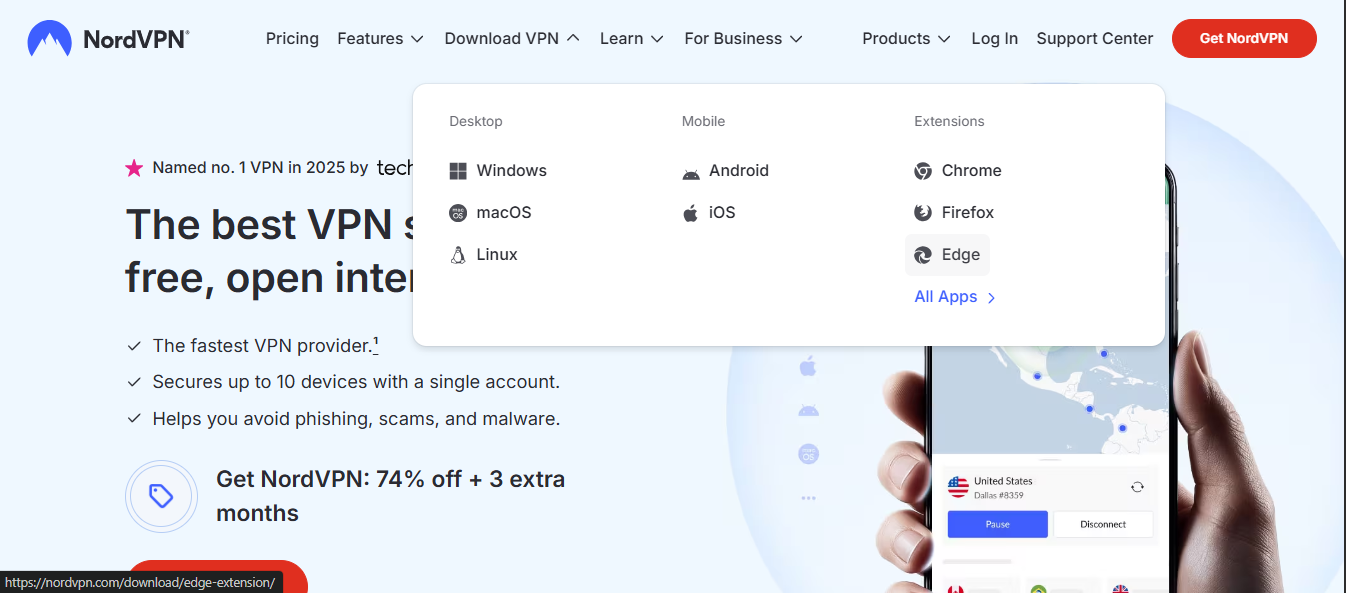
- Step 1: Visit the Edge Add-ons store and search for the VPN extension.
- Step 2: Click Get, then Add extension to install.
- Step 3: Launch the extension, sign in, and pick a server.
- Step 4: Verify that Edge traffic is being routed some extensions offer a global toggle.
Optimization tips speed, privacy, and reliability
- Choose nearby servers: closer servers usually give you lower latency and faster speeds.
- Use a single protocol: some extensions allow you to switch between protocols like OpenVPN, WireGuard, etc. Test which works best for your network.
- Enable the kill switch: ensures that if the VPN drops, your real IP isn’t exposed.
- Turn on DNS leak protection: prevents your DNS queries from leaking outside the VPN tunnel.
- Use split tunneling wisely: route only sensitive sites or apps through VPN if you don’t need full traffic protection.
- Update regularly: keep the extension and browser up to date to avoid security gaps.
- Check for IPv6 leaks: disable IPv6 in your browser if the extension doesn’t handle it well.
- Test speed after changes: run quick latency tests or use streaming to confirm performance.
Common pitfalls and fixes
- Pitfall: Free extensions drain data or log activity. Fix: Prefer reputable paid options with clear privacy policies.
- Pitfall: VPN extension blocks some sites. Fix: Try a different server or switch to a different protocol if available.
- Pitfall: DNS leaks despite VPN. Fix: Enable DNS leak protection and consider using a system-wide VPN in addition to the browser extension.
- Pitfall: Extension slows down browsing a lot. Fix: Test multiple servers and disable optional features like auto-start if not needed.
Security and privacy considerations
- No-logs policy: ensure the provider isn’t recording your activity.
- Jurisdiction: prefer providers in privacy-friendly regions, but also consider their legal obligations.
- Independent audits: look for third-party audits confirming privacy claims.
- Data handling: read how data is stored and for how long.
Real-world data and benchmarks
- speeds vary widely by location, network type, and server distance
- typical VPN overhead ranges from 5% to 35% depending on provider and protocol
- streaming performance often depends more on server capacity and distance than raw speed
- many top vendors publish independent speed tests; look for results from third-party labs or credible testing sites
Comparison table quick reference
- Provider A: strong no-logs policy, good worldwide coverage, OpenViN/WireGuard options, robust DNS protections, reliable for streaming
- Provider B: excellent speed, simple UI, decent privacy policy, some servers may be crowded during peak times
- Provider C: budget-friendly, strong privacy claims, fewer locations, solid customer support
Common use cases and recommended setups
- Streaming videos from restricted regions
- Connect to a nearby server in the target region
- Use a protocol with fast performance
- Check for DNS protection and a working kill switch
- Protecting public Wi-Fi connections
- Always enable the VPN extension on public networks
- Turn on kill switch and DNS leak protection
- Privacy-conscious browsing
- Use the no-logs provider
- Enable privacy-focused features and disable unnecessary data sharing
FAQ section
What is a browser VPN extension?
A browser VPN extension is a small add-on that routes your browser’s traffic through a VPN server, encrypts data, and can mask your IP. It may not encrypt non-browser traffic unless paired with a full VPN app.
Do browser VPN extensions work for all websites?
They work for most websites accessed via the browser, but some apps or services run outside the browser and may not be protected unless you use a system-wide VPN.
Can I use multiple VPN extensions at once?
In most cases, you should not run more than one VPN extension simultaneously. It can cause conflicts and leaks. Disable others before enabling a new one.
Will a browser VPN extension slow me down?
Yes, there is typically some speed reduction due to encryption and distance to the server. High-quality providers minimize this with optimized networks and protocols.
Is a kill switch necessary?
Absolutely. A kill switch prevents your real IP from leaking if the VPN connection drops.
Do I need a paid VPN for extensions to work reliably?
Free options exist but often come with limitations like slower speeds, data caps, or weaker privacy policies. Paid plans generally offer better reliability and protections.
How do I test for DNS or IP leaks?
Use reputable online tools like DNS leak test and IP leak test. Run them with the VPN connected to confirm your real IP and DNS aren’t leaking.
Can I use a browser VPN extension on multiple devices?
Many providers offer multi-device licenses or separate plans. Check the vendor’s policy for cross-device use.
How often should I update the extension?
Keep it updated whenever the provider releases security or feature patches. Regular updates help close vulnerabilities.
How do I switch servers quickly?
Most extensions offer a one-click server switch or a dropdown menu. Keep a list of your favorite servers for quick access.
Useful resources
- Official provider privacy policy - example provider privacy policy
- Independent security audits - independent audits reports
- DNS leak testing tools - dnsleaktest.com, whatsmydns.fr
- VPN speed benchmarks - speedtest.net, nperf.com
- Browser extension store pages - Chrome Web Store, Mozilla Add-ons, Microsoft Edge Add-ons
- General privacy guide - en.wikipedia.org/wiki/Privacy
- Streaming accessibility guides - streamingtips or official service help pages
- Device and browser security tips - national cybersecurity resources or major tech sites
- User reviews and forums - Reddit threads related to VPN usage, Stack Exchange privacy sections
Frequently Asked Questions
How do I know which VPN extension to trust?
Look for a reputable company, clear privacy policy, independent audits, transparent logging practices, and active user support. Check reviews from trusted tech sites.
Can I use a VPN extension for streaming on platforms like Netflix?
Some extensions work well for streaming; others are blocked by the streaming service. If you need reliable access, choose a provider known for working with streaming services and try different servers.
Is it safe to use a VPN on public Wi-Fi?
Yes, a VPN extension provides encryption, which helps protect data on public Wi-Fi. Ensure you also enable the kill switch and DNS protection.
Do all browsers support VPN extensions the same way?
Chrome, Firefox, and Edge support VPN extensions, but features and performance can vary. Some extensions might have different settings across browsers.
Will a VPN extension replace a full VPN app?
For most browser activities, a VPN extension is enough. If you need system-wide protection for all apps, consider a full VPN desktop/mobile app.
How do I know if I’m connected to the VPN?
Most extensions show a status indicator connected/disconnected and the current server. You can also verify your IP via an IP lookup service.
Can VPN extensions bypass regional restrictions for streaming?
Sometimes, yes, but streaming services actively detect and block VPNs. You may need to try different servers or a different provider.
What should I do if a site isn’t loading with VPN on?
Try another server, refresh, or disable the VPN for that site. Also verify that your extension isn’t blocked by the site or browser settings.
Is it okay to use VPNs for torrenting?
Some VPNs allow torrenting and offer specialized servers. Always check the provider’s policy and ensure you’re compliant with local laws.
How do I uninstall a VPN extension?
Open your browser’s extension manager, locate the VPN extension, and choose Remove or Uninstall. Restart the browser to ensure changes take effect.
If you want, I can tailor this guide to a specific provider you’re considering or help you compare a couple of options side-by-side with up-to-date benchmarks.
Fast vpn google extension is a browser VPN add-on that secures your online activity, hides your IP, and helps you bypass geo-restrictions. In this guide, you’ll learn what browser VPN extensions can and can’t do, how to pick a fast one, how to install it on Chrome, Firefox, and Edge, how to test speed and reliability, and practical tips for everyday use. If you’re shopping for a fast extension today, consider this NordVPN deal affiliate as a solid option to balance speed, security, and value:
Introduction: Fast vpn google extension at a glance
- What it is: a lightweight browser add-on that routes browser traffic through a VPN server, helping you appear as if you’re in a different location.
- What it isn’t: a full-system VPN. A dedicated VPN app on your device may provide broader protection e.g., all apps and features like split tunneling or advanced network controls.
- Why you might care: if you primarily browse, stream, or work in web apps, a well-chosen fast browser extension can boost privacy and unblock content without a heavy device-wide slowdown.
- How to use this guide: you’ll get a quick framework for selecting a fast extension, step-by-step installation help for major browsers, tips to maximize speed, and a practical FAQ that clears up common questions.
Useful resources unlinked text for reference
- NordVPN official site - nordvpn.com
- Google Chrome Web Store - chrome.google.com/webstore
- Mozilla Add-ons - addons.mozilla.org
- Microsoft Edge Add-ons - microsoft.com/edge/addons
- WireGuard - www.wireguard.com
- OpenVPN - openvpn.net
- Virtual Private Network - en.wikipedia.org/wiki/Virtual_private_network
- Data privacy basics - en.wikipedia.org/wiki/Privacy
- IP lookup and leak tests - www.ipleak.net
- Speed testing basics - www.speedtest.net
What a browser VPN extension is and how it differs from a full VPN app
- Browser extensions route only browser traffic by design. That means if you’re using a VPN extension in Chrome, Firefox, or Edge, your browser’s requests appear to come from the chosen location, while other apps on your device continue to use your normal connection.
- Full VPN apps route all device traffic through the VPN tunnel. This provides system-wide privacy but can introduce more overhead and occasional compatibility issues with some apps or games.
- For most everyday online tasks web browsing, email, some streaming in the browser, a fast browser extension is often sufficient and more convenient. If you’re protecting a PC- or device-wide workflow and you need to secure apps outside the browser, you’ll want a full VPN app in addition to, or instead of, a browser extension.
Key features to look for in a fast browser extension
- Speed-first architecture: a good extension minimizes overhead, uses efficient protocols, and selects servers optimized for speed and low latency.
- Protocol support: many extensions rely on WireGuard-based protocols for speed. some also offer OpenVPN or IKEv2 as fallback.
- DNS and IP leak protection: ensure the extension has DNS leak protection and a kill switch even for browser traffic to prevent accidental IP exposure.
- Privacy policy and logging: look for a no-logs approach, transparent data practices, and clear data retention details.
- Server network and locations: a broad spread of servers, especially nearby locations, helps maintain speed and access to geo-restricted content.
- Secure authentication and access: modern extensions support strong authentication methods and reviewable security audits.
- Compatibility and ease of use: it should be easy to enable/disable, switch locations, and work with your favorite sites without frequent disconnects.
- Lightweight footprint: low RAM and CPU usage means your browser won’t slow down during regular tasks.
- Cross-browser support: if you use Chrome, Firefox, and Edge, you’ll want an extension that works well across all three.
Additionally, real-world speed is influenced by your baseline connection, server load, and distance to the server. Expect some speed loss with any VPN, but a fast extension minimizes this with modern protocols, optimized servers, and efficient client software.
Choosing the right fast browser extension: practical tips
- Start with a reputable provider that offers a well-built browser extension and a full app in case you want device-wide protection later.
- Check server proximity: choose extensions that let you select a nearby country to minimize latency for daily browsing.
- Prioritize WireGuard-based options for speed and modern cryptography, while ensuring you have a solid privacy policy.
- Test multiple servers: if one location is slow, another nearby location may perform significantly better.
- Be realistic about streaming: many streaming services detect VPNs. A fast extension with a few known streaming-capable servers can help, but you may need to try different servers or switch to a full VPN app for the best results.
- Protect against leaks: enable DNS leak protection and ensure a kill switch option is available for the browser extension scenario.
How to install a fast browser extension on Chrome, Firefox, and Edge
- Chrome:
- Open the Chrome Web Store.
- Search for the VPN extension you want for example, “NordVPN” or another reputable provider.
- Click Add to Chrome, then confirm by clicking Add extension.
- The extension icon will appear to the right of the address bar. Click it to sign in and select a server location.
- Firefox:
- Open Mozilla Add-ons.
- Search for the VPN extension.
- Click Add to Firefox, then Confirm Add.
- Access the extension via the toolbar, sign in, and pick a country.
- Edge:
- Open the Edge Add-ons store.
- Find the VPN extension, click Get, then Add extension.
- Use the extension button in the toolbar to sign in and choose a server.
Tips to maximize speed with a fast VPN extension
- Connect to a nearby server first, then test a few other nearby locations to compare speeds.
- Choose servers optimized for streaming if you’re watching content in the browser. sometimes a nearby but non-streaming server is faster for general browsing.
- Disable other browser extensions that may interfere with network requests while you’re testing VPN speed.
- Make sure browser extensions aren’t duplicating connections or causing extra handshakes. Some extensions can bypass the kill switch or DNS protection without you realizing it.
- Use a modern browser with hardware acceleration enabled, which can help reduce the CPU overhead while encryption is in use.
- If you’re on a metered or slow network, select a server in a country with a less congested exit point.
Security and privacy considerations with browser VPN extensions
- No-logs policy: a strong “no-logs” policy helps limit what the provider can store about your activity. Look for independent audits or clear privacy statements.
- Encryption strength: AES-256 is the standard. ensure your extension uses strong cryptography for browser traffic.
- DNS protection: DNS leaks can reveal your real IP even when the browser traffic is routed through a VPN. Make sure the extension has DNS leak protection.
- Kill switch behavior: some browser extensions offer a “network lock” or a kill switch to stop traffic if the VPN disconnects. This helps prevent accidental exposure.
- Third-party tracking: avoid extensions that inject trackers or telemetry beyond what’s necessary for service operation. Review permissions the extension requests before installation.
- Compatibility with other privacy tools: if you use privacy-focused tools ad blockers, anti-tracking extensions, etc., check for conflicts that could degrade performance or privacy.
Performance data and expectations
- Real-world speed impact varies, but a good fast browser extension often limits overhead to single-digit to low-double-digit percentage slowdowns compared to your baseline connection, assuming a near-peak server and a modern protocol.
- Global VPN market context: the consumer VPN market has grown rapidly, with major players expanding browser extension capabilities to provide fast, browser-focused privacy. This growth fuels faster servers, better protocols, and more competition that benefits users with lower latency and improved reliability.
- Streaming reality: while some streaming sites actively block VPNs, many users still enjoy browser-based streaming with the right server location and a trusted provider. Be prepared to switch servers or disable the VPN momentarily for certain sites if needed.
Use cases: practical scenarios for a fast vpn google extension
- Everyday browsing and privacy: hide your IP from websites, protect public Wi-Fi sessions, and reduce tracking by advertisers.
- Geo-restriction bypass: access region-locked content by selecting a server in a permitted country.
- Secure work-from-home tasks in the browser: protect sensitive web apps and communications when using web-based tools, chat apps, and corporate portals.
- Quick testing and research: researchers, students, or content creators who need to view content from multiple regions can often do this faster with a browser extension than with a full VPN app.
- Light gaming in-browser: some browser-based games benefit from reduced ping when connecting through nearby servers. however, gaming traffic for non-browser games may still need a full VPN.
Common myths about browser VPN extensions
- Myth: “All VPNs are the same.” Reality: different providers offer distinct server networks, speeds, and privacy guarantees. Do your homework and test a few options.
- Myth: “A browser extension protects all devices.” Reality: browser extensions typically protect only browser traffic, not apps or system services.
- Myth: “Free extensions are just as good as paid.” Reality: paid options often offer better privacy practices, faster servers, and more consistent performance. Free options may compromise privacy or throttle speed.
- Myth: “If it’s fast, it’s unsafe.” Reality: you can still get good speed with strong encryption and reputable providers that publish transparent privacy policies.
The NordVPN option and how to think about it
- NordVPN has a widely used browser extension with features aligned to speed and privacy, including WireGuard-based protocols and built-in security protections. If you’re evaluating fast browser extensions, testing a well-known option like NordVPN via their browser extension is a solid starting point, especially if you want reliable streaming and cross-device compatibility.
- Affiliate note: the NordVPN deal in the introduction reflects the common practice of evaluating a reputable provider with a bundled set of features. Always verify current pricing, terms, and features on the official site before committing.
Best practices for maintaining privacy and performance
- Regularly review and update extensions: keep your browser and extensions up to date to benefit from security fixes and performance improvements.
- Use a clean testing process: when evaluating speed, test on a few different servers and at different times of day to understand typical performance.
- Combine with a no-logging policy: ensure your overall privacy is protected by a provider with explicit no-logs commitments and transparent policy.
- Pair with device-level protections: consider a full VPN app for device-wide coverage in addition to a browser extension, depending on your needs.
- Avoid suspicious extensions: only install extensions from reputable sources and vendors with strong track records and independent audits.
Frequently Asked Questions
What is a browser extension VPN?
A browser extension VPN is a lightweight add-on for your web browser that routes your browser traffic through a VPN server. It provides privacy and geo-unblocking primarily for web activity, but it doesn’t automatically protect everything on your device like a full VPN app would.
Will a browser extension VPN protect all my traffic?
Usually not. Browser extensions typically protect traffic inside the browser. Other apps, background services, and system-level traffic may bypass the extension unless the provider also offers a device-wide VPN app.
Are browser extensions as secure as full VPN apps?
They can be very secure for browser traffic, especially when built with strong encryption and strong privacy policies. However, full VPN apps offer broader protection for all device traffic and may include extra features like split-tunneling, dedicated kill switches, and system-wide DNS protections.
Why does a VPN extension sometimes slow down my browsing?
Overheads come from encryption, the distance to the VPN server, and server load. If the extension uses a fast protocol like WireGuard and you’re connected to a nearby server, the slowdown is often minimal.
Can I use a free browser VPN extension?
Free options exist, but they may come with limitations like data caps, slower speeds, fewer server locations, and potentially weaker privacy controls. For regular use, a reputable paid provider is generally a better choice. Expressvpn contact: the definitive guide to reaching ExpressVPN support, contact options, hours, and troubleshooting tips 2026
Do I need a separate VPN for mobile devices?
If you primarily browse on mobile, you can use a browser extension there as well for Chrome on Android or iOS browsers that support extensions. However, many people prefer a full VPN app on mobile for system-wide protection.
How can I check if my IP address really changed when I enable the extension?
Visit an IP-check website e.g., iplocation.net or whatismyipaddress.com before and after enabling the extension to confirm the IP address and approximate location have changed.
What’s a kill switch, and do browser extensions have one?
A kill switch stops all browser traffic if the VPN disconnects, preventing IP leaks. Some browser extensions provide this feature. if not, look for extensions that offer a firm DNS and IP exposure protection setting.
Is it legal to use VPNs?
In most places, yes. There are jurisdictions with restrictions or laws governing VPN use. Always respect local rules and the terms of service of the sites you access.
How do I know if a VPN extension leaks my DNS or IP?
Run a DNS leak test and IP test while the VPN is active. If your real IP or DNS servers appear, your extension might have leaks. Enable DNS leak protection and consider a kill switch if available. Edgerouter x vpn setup guide for EdgeRouter X: OpenVPN IPsec WireGuard and site-to-site configurations 2026
Can I rely on a browser extension if I’m concerned about privacy for sensitive work?
For highly sensitive tasks, combine browser-level protections with a trusted full VPN app and robust device-level security practices. Browser extensions add a layer of privacy, but aren’t a silver bullet for all sensitive activities.
Do I need to disable WebRTC for better privacy with VPN extensions?
WebRTC can leak your real IP in some cases. If your browser extension doesn’t handle WebRTC leaks automatically, you may want to disable WebRTC or use browser settings/add-ons to block leaks while using a VPN.
How do I choose between Chrome, Firefox, and Edge extensions?
Choose the extension that offers the best balance of speed, reliability, and server options for your preferred browser. If you switch between browsers often, you may want an extension with strong cross-browser support and centralized account management.
What should I do if an extension stops working or disconnects frequently?
Try switching to a nearby server, update the extension, restart the browser, clear cache, or try a different server. If issues persist, contact the provider’s support and check for outage notices.
Can I use the same VPN account across multiple devices?
Yes, most VPN providers allow you to use a single account on multiple devices. You can log in to the browser extension on each browser and sync server preferences across devices via the provider’s app or account portal. Easiest vpn to use for beginners: a practical guide to quick setup, privacy, and streaming 2026
Is a browser extension enough for my online privacy?
For many users, yes, but it depends on your threat model. If you’re concerned about app-level tracking, corporate monitoring, or other network activities outside the browser, a device-wide VPN app is a better choice in combination with good privacy hygiene.
How do I test the speed of a fast VPN browser extension?
Pick a few servers near you, run a speed test in the browser, and measure latency ping and download/upload speeds. Compare results across servers to identify the fastest options for your typical tasks.
Conclusion: practical takeaways
- A fast vpn google extension is a practical tool for securing browser traffic, bypassing geo blocks, and maintaining privacy without overhauling your entire device setup.
- For best results, pick a reputable provider with a speed-optimized protocol, reliable server network, and sensible privacy practices. Test multiple servers and be mindful of DNS leaks, kill switches, and cross-browser compatibility.
- If you want a quick, well-supported option with a robust feature set for both browser traffic and broader device protection, consider trying a trusted provider that offers strong browser extensions and a full app. The NordVPN offer featured in this guide is a solid starting point for those who want immediate access to fast, reliable performance.
Remember, the right browser VPN extension is about balancing speed, privacy, and convenience. With a thoughtful approach—testing a few servers, validating privacy safeguards, and keeping your browser updated—you’ll get the most out of your Fast vpn google extension experience.
小牛 vpn 官网 使用全攻略:隐私保护、速度测试、海外服务器、价格与套餐、安装与使用技巧、常见问题解答 Edgerouter x vpn speed 2026